What to Do During a Vehicle Breakdown: A Safe Guide

Table of Contents
What to Do During a Vehicle Breakdown: First Steps to Stay Safe
What to Do If Your Car Breaks Down on the Highway
If You Cannot Reach the Shoulder
If You Must Exit the Vehicle
Communicating Your Location
Who to Call When Your Car Breaks Down
What to Keep in a Car Emergency Kit
How to Prevent Car Breakdowns with Routine Maintenance
Special Situations: EVs, Remote Areas, and Vulnerable Passengers
Electric and Hybrid Vehicles
Remote Locations
Children, Pets, and Passengers With Mobility Needs
Conclusion: Being Prepared Makes All the Difference
Frequently Asked Questions
Last Updated: October 12, 2026
What to Do During a Vehicle Breakdown: First Steps to Stay Safe
A vehicle breakdown can happen to anyone, even with a well-maintained car.

A vehicle breakdown is any situation where your car stops working or becomes unsafe to drive. That includes a flat tire, a dead battery, a blown engine, or a warning light you cannot ignore.
The steps below keep you and your passengers safe while you wait for help.
Stay calm and assess the situation. Take a breath. Check your mirrors and note where you are.
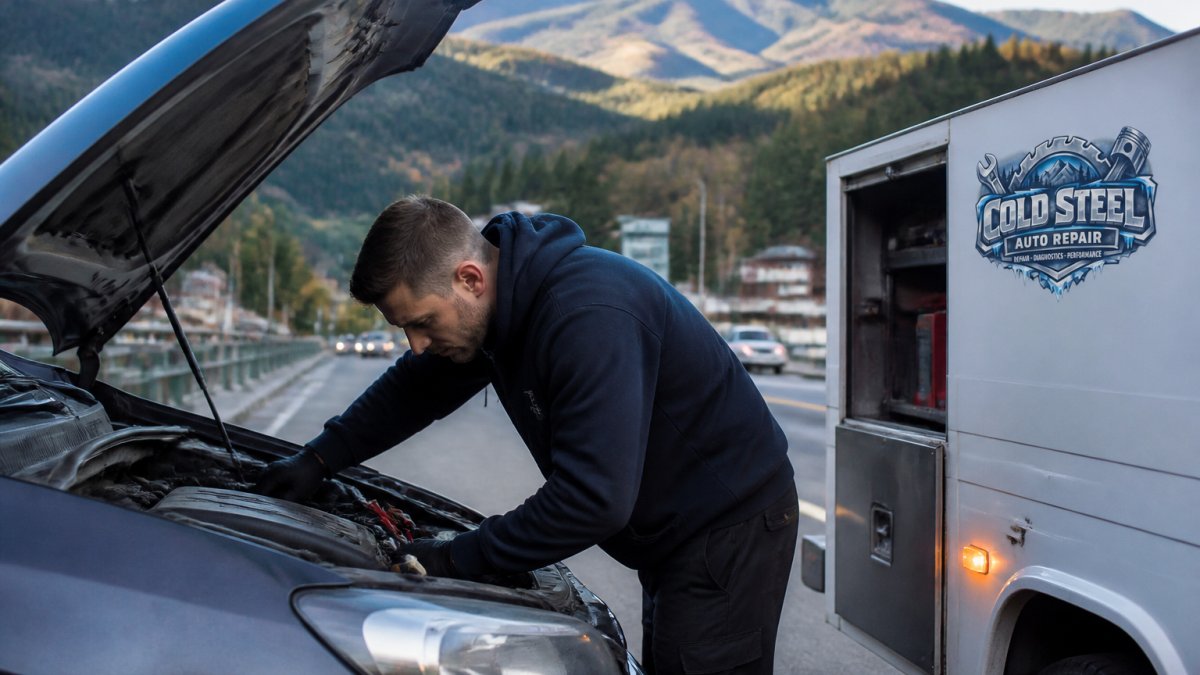
Move the vehicle to a safe location. Pull as far off the road as you can.
Turn on your hazard lights. Make your car visible to other drivers right away.
Use the shoulder or hard shoulder where appropriate. Never stop in a live lane if you can avoid it.
Position the vehicle away from moving traffic. Angle your wheels so your car rolls away from the road if hit.
Decide whether to remain inside or exit. On a busy road, staying buckled in is often safer.
Exit on the side away from traffic if you must get out. Use the passenger door when possible.
Use a warning triangle or other safety equipment if you have it and it is safe to place.
Pro Tip Set your parking brake and turn your wheels toward the verge, away from traffic. If another car clips yours, this small step can stop it from being pushed into the road.
What to Do If Your Car Breaks Down on the Highway
Highway breakdowns are the most dangerous kind because traffic moves fast and closing speeds are high. If your car breaks down on the highway, get to the right shoulder, turn on your hazard lights, and stay in your vehicle with your seatbelt on until help arrives.
Here is how to handle it step by step:
Signal and steer toward the right shoulder as soon as you feel trouble.
Coast as far from the traffic lanes as you can, aiming for the widest part of the shoulder.
Turn on your hazard lights before you fully stop.
Set the parking brake, keep your seatbelt fastened, and angle your wheels toward the verge.
Call for help and give your exact location using mile markers, exit numbers, or the last overhead sign you passed.
If You Cannot Reach the Shoulder
This is the scenario most guides skip, and it is the one that matters most. If your car dies in a live lane and will not roll clear, do not get out and do not try to push it across traffic.
Keep your seatbelt on and your hazard lights running.
If the car still has electrical power, turn the steering wheel so the wheels point straight ahead, not toward traffic.
Call 911 and say plainly that you are stopped in a live lane. That phrasing moves you up the priority list.
If you have a warning triangle or flares, do not walk into traffic to place them. Your life is worth more than the triangle.
If the car is in a lane with a concrete median or barrier beside it, stay in the seat and wait. Do not climb over the barrier into oncoming lanes.
A common pattern is that drivers panic and step out into the adjacent lane to wave at traffic. That single move causes a large share of secondary crashes. Stay belted until a responder or tow operator signals you it is safe.
If You Must Exit the Vehicle
If the car is safely off the travel lanes and you need to get out, exit through the passenger-side door, away from traffic. Walk to the far side of the guardrail or the grassy verge if there is one, and stand well behind the barrier, never between your car and the road. Keep children and pets on the same side as you, and hold younger children by the hand.
Watch Out Do not stand behind or beside your car while waiting on a busy road. Drivers drift onto shoulders more often than you would think. Stay inside with your belt on whenever it is safe to do so.
Communicating Your Location
When you call for help, the dispatcher needs three things: where you are, which direction you are traveling, and what the car is doing. Read the nearest mile marker or exit sign out loud. If you are between markers, name the last exit you passed and the next one ahead. Mention your lane position if you are still in a live lane.
state highway safety and move-over law guidance
Who to Call When Your Car Breaks Down
Who you call depends on where you are and what kind of help you need. For a crash or a car stuck in a live lane, call 911 first. For a routine breakdown on the shoulder, call a towing service, your roadside assistance provider, or your insurance company if you have coverage.
WFMY News 2
Your options include:
911 for emergencies, crashes, or danger to life.
Roadside assistance through a membership plan.
Your insurance company, which may include towing.
A local tow truck or towing service you trust.
A repair shop like Cold Steel Auto Repair llc for diagnosis and repairs once you are safe.
Keep your insurance card and roadside assistance number in your glove box. When you call, share your location, your vehicle make and model, and what went wrong.
What to Keep in a Car Emergency Kit
A car emergency kit is a set of tools and supplies you keep in your vehicle so you can handle a breakdown safely. A good kit helps you stay visible, stay warm, and call for help without scrambling.
Pack these items:
Warning triangle or reflective cones
Reflective vest or jacket
Flashlight with fresh batteries
Jumper cables or a jump-starter pack
Tire pressure gauge and a spare tire
Check your kit twice a year. Replace batteries and expired supplies.
How to Prevent Car Breakdowns with Routine Maintenance
Most breakdowns do not come out of nowhere. They build up over weeks or months. Routine maintenance catches small problems before they strand you.
Focus on these checks:
Oil changes on the schedule in your owner's manual.
Engine fluids: coolant, brake fluid, transmission fluid, and power steering fluid.
Tire condition: tread depth, pressure, and signs of wear.
Battery health, especially before cold weather.
Belts and hoses for cracks or soft spots.
Brakes for noise, pulling, or a soft pedal.
A common mistake is skipping maintenance because the car "feels fine." Many failures give warning signs first, like a new noise, a warning light, or a small leak. Catching those early is far cheaper than a roadside repair.
Key Takeaway Preventive maintenance is the cheapest roadside assistance you will ever buy. A routine inspection costs far less than a tow and an emergency repair.
If you live in Sevier County or are just passing through, Cold Steel Auto Repair llc offers pre-trip safety inspections and fluid checks so you can hit the road with confidence.
Special Situations: EVs, Remote Areas, and Vulnerable Passengers
Not every breakdown follows the same script. Electric vehicles, remote roads, and passengers with special needs each call for a different approach, and most generic guides leave these readers to figure it out on their own.
Electric and Hybrid Vehicles
If your EV or hybrid loses power, pull over, shift to Park, and turn on your hazards. The high-voltage system is the part that changes everything.
Do not touch orange cables, the high-voltage battery pack, or any component marked with a high-voltage warning label. Those cables carry enough current to kill.
Do not attempt a jump start on the high-voltage battery. The 12-volt accessory battery can sometimes be jump-started, but only if your owner's manual says so and you follow its procedure exactly.
Tell the tow dispatcher it is an EV or hybrid before the truck rolls. These vehicles need a flatbed or wheel-lift with the drive wheels off the ground, because spinning the drive wheels can damage the motor or charging system.
If the car will not shift out of Park, tell the dispatcher. Many EVs have a manual park-release or tow mode that the operator needs to know about.
If you smell burning, see smoke, or hear hissing from the battery area, get everyone out, move well away from the vehicle, and call 911. Battery fires can reignite hours after they appear out.
Remote Locations
On a quiet road far from help, the math changes. It is far easier for rescuers to spot a car than a person who wandered off looking for signal.
Stay with your vehicle unless staying is clearly more dangerous than leaving.
Share your location pin through your phone's maps app if you have any signal at all, even one bar.
If you have no signal, note the last town, mile marker, or crossroads you passed so you can describe it when you reach help.
Run the engine briefly for heat only if the exhaust is clear of snow, grass, or debris. Never leave it running while you sleep.
Conserve phone battery: lower screen brightness, close background apps, and keep the phone warm inside a pocket rather than on a cold seat.
Children, Pets, and Passengers With Mobility Needs
Vulnerable passengers need a plan before the breakdown, not during it.
Children: Keep them buckled in the vehicle if it is safe to stay. If you must exit, have them exit on the traffic-away side and hold hands. Never let a child stand near the road edge.
Pets: Keep dogs leashed or in a carrier before opening any door. A frightened pet that bolts onto a highway is a second emergency. Bring water and a bowl.
Older adults and passengers with mobility needs: Ask before you move them. If a passenger uses a wheelchair, walker, or oxygen, keep their equipment within reach and tell the 911 dispatcher about it so the responding unit is prepared.
Medication and medical conditions: If a passenger has a condition that could worsen while you wait, say so on the call. Dispatchers can prioritize medical response even for a routine breakdown.
Best For Drivers who want one trusted shop for routine care and unexpected repairs, whether they live nearby or are just visiting the area.
Conclusion: Being Prepared Makes All the Difference
A breakdown is stressful, but it does not have to be dangerous. Knowing the first steps, packing a solid emergency kit, and keeping up with maintenance turn a scary moment into a manageable one.
When your car needs attention, Cold Steel Auto Repair llc is here to help. With 30 years of experience, certified mechanics, and honest, transparent pricing, we deliver the right fix the first time.
Frequently Asked Questions
What should you do first if your car breaks down while driving?
Your first priority is to maintain control of the vehicle. Do not panic. Turn on your hazard lights immediately to warn other drivers. If possible, steer your car toward the road shoulder or another safe stopping place away from moving traffic. If you cannot move off the road, stay in your lane and call 911. Once stopped, assess the situation and decide whether it is safer to remain inside or exit the vehicle. Always exit on the side away from traffic.
Should you stay in your car if it breaks down on the highway?
In most cases, it is safer to stay inside your vehicle with your seatbelt fastened. This is especially true on busy highways where exiting puts you at risk from passing traffic. Call for roadside assistance and wait for help to arrive. If you must exit, always use the door on the side away from traffic. Never stand behind or between your car and another vehicle. Move to a safe location behind a guardrail if one is available.
Who should you call when your car breaks down?
The right call depends on your situation. On a highway or in a dangerous spot, call 911 first. Otherwise, contact your roadside assistance provider, insurance company, or a local towing service. If you have a warranty or a membership with a service like AAA, call them. Keep a list of emergency contacts in your car. For local repairs, a trusted mechanic can help you plan the next steps after you are safe.
How can routine maintenance help prevent a vehicle breakdown?
Routine maintenance is your best defense against a vehicle breakdown. Regular oil changes keep your engine lubricated. Checking and replacing worn tires improves safety and prevents blowouts. Maintaining proper fluid levels for coolant, brake fluid, and transmission fluid avoids overheating and mechanical failure. A professional mechanic can spot small issues before they become major problems. This proactive approach saves money and keeps you safe on the road.
Set Appointment Today

Comments